Thursday, April 30, 2009

CityWatchLA - Fast Times in the San Fernando Valley

CityWatch, May 1, 2009
Vol 7 Issue 35

LA's Transportation Commission just approved three more speed limit increases in the San Fernando Valley, this time for Roscoe Boulevard, Sherman Way, and Tampa Avenue.

The proposals were on the Board's consent agenda, meaning they would have passed without discussion but for the fact that a member of the community showed up to object.

Two of the newest Commissioners, Jaime J. Rodriguez and Grace E. Yoo, both voted against the proposed speed limit proposals, indicating they would like more information.

Stephanie M. Rodriguez, John Frierson, and Board President George E. Moss all voted for the proposed increases which left D. Malcolm Carson in position to defeat the proposals or to affirm the increases.

Carson gave a fairly comprehensive speech agreeing with the many objections to the speed limit increases including the need to consider the safety of pedestrians and cyclists when raising speed limits. He also agreed that LA should consider other mitigation techniques such as road diets, traffic calming, and other complete streets tolls, all of which looked like he was going to vote against the proposals.

Then he reversed his position saying so much time had been invested in the proposals that he didn't want to stand in the way, an explanation he also used last time when he approved another round of speed limit proposals in the West Valley.

The fact that two of the commissioners would want more information on the State's "Speed Trap" law, the need to reconcile the speed limit with the prevailing speed in order to use radar and laser, and other options for facilitating compliance with the 85% rule should speak volumes in terms of the need for a public conversation on speed limits in our communities.

Department of Transportation’s Assistant GM, John Fisher, instead defers on the community's desire to get involved in the establishment of speed limits by saying "As we all know, the setting of radar-enforceable speed limits can become a very emotional issue."

The recent spike in pedestrian deaths on the streets of LA indicates that fear is a very rational response and the LADOT's failing to consider the people who live on the affected streets, walk on the affected streets and ride bikes on the affected streets is a failure to serve the needs of the community.

Deputy City Attorney Shelley Smith demonstrated the need for public participation when she advised the new Commissioners on the proposed speed limits. Smith positions the speed limit increases as a simple vote for or against radar enforcement. She has been contradicted on this point in the past by then-Commissioner Andrea Alarcon and this time by Commissioner Carson but Smith continues. Having prepared the Municipal Code amendments that are on the table, one might question her objectivity when advising the Board on how to vote.

The discussion over speed limit increases should never turn into a debate over the use of radar or laser speed limit enforcement. In fact, this entire debate is borne from a desire to put the most effective law enforcement tools in the hands of the LAPD. At issue is the hasty, uninspired and lazy rush to simply raise the speed limits rather than to explore the other options.

Here are the issues:

1) The community must be involved from the beginning of the process. Speed limit certifications are expiring every year. The community should know what is coming up and how many streets are currently expired and not eligible for radar/laser enforcement. (some have been expired for years so to refer to people who fight the speed limit
increases as obstructionists is disingenuous)

2) The process should always start with a conversation of the full tool-box of mitigation tools, from bulb-outs to safety islands, diagonal parking to bike lanes, speed tables to stop signs, traffic calming to road diets. These options must be explored first and in every instance, speed limit increases must be positioned as a last resort and with the full participation of the community.

This past year the City of Los Angeles approved approximately 20 speed limit increases and is prepared to process another dozen.

Meanwhile traffic engineers, law enforcement agencies and communities throughout the state are working to revise the "speed trap" law and to give local communities more control over their streets.

It's time for the people of the largest City in the most populated State in the most powerful Country in the world to work together to take a leadership role in developing Safe Streets for everybody. (Stephen Box is a transportation and cyclist advocate and a CityWatch contributor. He can be reached at Stephen@ThirdEyeCreative.net)

Tuesday, April 28, 2009

EHNC Declares East Hollywood a "Pedestrian Oriented Community"


Feet First Campaign kicks off East Hollywood SoleMates™ Project

The East Hollywood Neighborhood Council has set the standard for Los Angeles by declaring East Hollywood a "Pedestrian Oriented Community" and committing to an ambitious five-step "SoleMates™" program that will engage the community, establish a standard and fund the improvements.

David Bell, President of EHNC board, said "We're excited to declare East Hollywood a Pedestrian Oriented Community and we're looking forward to working with our neighbors to make our vision of a walkable, livable community a reality."

East Hollywood is transit rich and has three Metro Rail stations within its boundaries. At the same time it is park poor with the least parkland of any Los Angeles neighborhood council. its boundaries are Hollywood Boulevard to the north, the 101 Freeway to the south, Western Ave. to the west and Hoover to the east.

With 54 thousand stakeholders, East Hollywood is one of the densest communities in LA and with over 100 languages spoken it is definitely one of the most diverse. Locals are proud of the rich variety of restaurants, theaters, clubs and galleries that make up East Hollywood.

East Hollywood is one of the youngest Neighborhood Councils in Los Angeles, having just celebrated its 2nd anniversary, but it has a rich legacy of leadership positions on everything to communications to land use to policy.

The EHNC used a music video as part of its certification process and was a pioneer in social media with YouTube videos, MySpace, Twitter and Facebook all complementing the more traditional styles of communication.

Last year, East Hollywood was the first Neighborhood Council to endorse the Cyclists' Bill of Rights and two months ago, they took thousands of people to the streets with ArtCycle, a street fair that included guided bicycle tours of the art galleries in the neighborhood.

The SoleMates™ project is an innovative approach to developing walkable, ridable, livable communities that put people first and positions access and mobility as basic human rights that serve as the foundation for a complete and sustainable community.

For more information, contact Stephen Box at 323.962.6540 or FeetFirst@ThirdEyeCreative.net.

Download the SoleMates Project in pdf here.

CityWatchLA - Bike Path to Blight Path … and No One to Blame

CityWatch, Apr 28, 2009
Vol 7 Issue 34

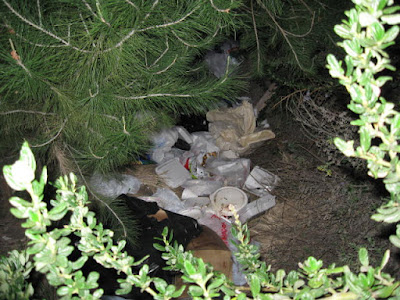
The Orange Line Bike Path is 14 miles of bureaucratic "no-man's land"  and a jurisdictional "hot-potato" that has departments and agencies  scrambling for cover as the City's Transportation Committee asks "Hey! How did the Bike Path turn into a homeless encampment?"

Critics long ago warned that building a bike path with a fence on one   side, a wall on the other and surrounding it with bushes and trees   that grow up and out would result in an environment that is unsafe   for pedestrians and cyclists but hospitable to those who favor seclusion and a place to hide.

Those warnings were ignored and the predictions came true. The Orange Line Bike Path is now so overgrown that in some areas such as Van  Nuys, it is populated with homeless encampments. Making things worse is the close proximity of a recycling center and two liquor stores.  All very convenient for the campers but at the expense of the pedestrians, the cyclists and the local residents.

Two months ago, the Van Nuys Neighborhood Council convened a meeting   to address the situation, a meeting so well attended by agency and department reps that it seemed certain that the Bike Path was to be  cleaned up and reclaimed. Such was not the case.

This past week, the Transportation Committee jumped into the fray and convened a meeting to determine what went wrong and who is going to   fix it. The LADOT took the hot seat and explained the difficulty in supervising maintenance contracts and of working with the Metro and Rec & Parks and how the abundant overgrown landscaping wasn't their fault.

The LAPD was represented, Councilman Cardenas was represented and the Neighborhood Prosecutor, Tamar Galatzan also  appeared but nobody could explain who was in charge, who had authority and who had a plan.

Councilman Alarcon cut to the chase at one point in the "Who's  responsible?" debate and said simply "If it's LA's Bike Path then we  should take care of it!"

That should have been the point at which everybody stepped up but  instead we were treated to another round of "Yes, We Can't!"

Unfortunately, the Groupthink that prevents agencies and departments   from being "negative" and just calling it as they see it is still in   play and the LADOT, the Metro, the LAPD, the LASD, the Neighborhood   Prosecutor, the BOSS, LAHSA, the Councilmembers and anyone else with   a piece of the Bike Path are still having polite meetings where they dance about and explain why they're not responsible.

The Orange Line Bike Path has been around for a little over three  years. It was designed and built by the Metro and the LADOT Bikeways Department was there through the entire process. In fact the LADOT is so proud of the Orange Line that they have a presentation they take  to conferences taking credit for its success. Somewhere along the way, the responsibility for the Orange Line was formally transferred  to the LADOT which, based on results, dropped the ball.

Perhaps it's time to call in the DWP and have them cut down the  forest, relandscape with drought tolerant plants and create a 14 mile long demonstration garden on water conservation. Maybe we could plow it all under and plant a 14 mile long Victory  
Garden and use the wide stretches for a Farmer's Market.

Whatever we do, it is imperative that the LADOT stop paying its contractors until they execute their contracts.

It is also imperative that the LAPD clarify with dispatch and the  patrol officers that the Orange Line Bike Path is not the  responsibility of the Sheriff but is the responsibility of the LAPD.

If the Van Nuys area is to be cleaned up, it would also be wise to have the Neighborhood Prosecutor work with the ABC to address the two  liquor stores that cater to the "campers" and who are a blight on the  community.

As long as blight is on the radar, the recycling center has had a negative impact on the area and yet it continues to operate. It's time for us to work together to make our abatement programs work for  the neighborhood.

Most of all, we've got to get over our fear of raising the standards and offending other departments. We've got to evaluate performance  based on results, not on bureaucratic endurance. We've got to stop   settling for mediocrity and we've got to reach for greatness.

The Orange Line Bike Path is either a monument to our mediocrity or   it’s an opportunity to demonstrate our greatness. Either way, it's our   call. (Stephen Box is a transportation and cyclist advocate and writes for CityWatch. He can be reached at Stephen@ThirdEyeCreative.net)

Glossary:

LADOT - The Los Angeles Department of Transportation. Within the  LADOT is the Bikeways Division, responsible for the Orange Line and  other bikeways facilities.   http://www.ladot.lacity.org

Metro - The Countywide Metropolitan Transit Authority. They are the  major operator of bus and rail service in Los Angeles County. http://www.metro.net/index.asp 

LAPD - The Los Angeles Police Department . They are responsible for the Bike Path. When calling 911 from a cell phone remember that it goes to the CHP. Program 213-928-8206 or 213-928-8208 into your cell phone so that you can get to LAPD dispatch quickly.http://www.lapdonline.org

LASD - The Los Angeles Sheriff's Department. They are a County Agency under contract to provide services to the Metro. They patrol the Metro Stations, they are responsible for the busway and they respond if there is an incident on a bus. They are not responsible for the Bike Path. http://www.lasd.org

BOSS - LA's Bureau of Street Services. They are responsible for the 6500 miles of streets within Los Angeles. They pick up the abandoned furniture and they factor into this scenario on the Orange Line because of the homeless encampments and the amount of furniture that must sometimes be removed. You can reach them by calling 311. http://www.lacity.org/BOSS 

LAHSA - The Los Angeles Homeless Services Authority is a joint powers authority representing both the City of LA and the County of LA. You can access social services by calling 211. http://www.lahsa.org

Rec & Parks - The Los Angeles Department of Recreation and Parks is sometimes mentioned when discussing bike paths because bike paths are often considered recreational facilities. In fact the LADOT fought all the way to the State Supreme Court to have bike paths declared recreational facilities so that the City would not be liable for injuries resulting from design or maintenance negligence. (Prokop vs. City of Los Angeles) LA prevailed and bike paths are now funded with transportation funding but then declared recreationa facilities. Meanwhile, Rec & Parks has little to do with bikeway facilities except when Bikeways was looking for someone to handle the Orange Line maintenance. http://www.laparks.org

ABC - The California Department of Alcoholic Beverage Control issues and regulates liquor licenses. If the two liquor stores along the Orange Line Bike Path in Van Nuys are contributing to the problems, it must be documented and the ABC will consider this when evaluating the licenses. If the LAPD and the Neighborhood Prosecutor aren't documenting the incidents and their relation to the liquor stores, the ABC can't do its job. The local ABC agent must be involved in the Orange Line Task Force. http://www.abc.ca.gov

VNNC - The Van Nuys Neighborhood Council meets every month and on May 13, the full Board will convene to address the issues of the  community. Expect to see reps from the offices of Padilla and Cardenas and Villaraigosa as well as Bikeways, the LAPD, the Metro, the City Attorney's office and anyone else with a piece of the Orange Line Bike Path. http://vnnc.org

CityWatchLA - Break for Taxi Parkers Stirs a Hornet’s Nest

CityWatch, Apr 28, 2009
Vol 7 Issue 34

LA's City Council, taking another swing at the hornet's nest, has directed the LA Department of Transportation to work on a plan to soften neighborhood parking prohibitions for taxi cabs.

While at first glance it seems like a great and green idea to support our Taxi Cab industry, any revisions to the LA Municipal Code restricting commercial vehicles in neighborhoods surely warrants a thorough analysis and a conversation with the community.

Therein lies the rub.

The dust from the fray over the City Council's recent revision of parking rates, hours and enforcement has barely settled and they're at it again. All with no Neighborhood Council engagement.

We live in a city where 18 wheelers regularly park overnight in violation of prohibitions but the political will for enforcement is lacking. After all, they're engaged in the business of moving goods and that's good for LA!

We live in a city where motor-homes get parked on side streets and quiet neighborhoods quickly turn into campgrounds, all in violation of prohibitions. Again, all that's missing is the political will to enforce the code and to tackle homelessness with some real solutions, not a blind eye.

We live in a city where detached trailers used for advertising litter the curb lane and clutter the streets, yet our leadership can't find a way to solve the problem. Whether it's respect for the 1st amendment or simply fear of litigation, the community is still left without the support it deserves.

It's in this context that the City Council's recent actions to modify neighborhood parking regulations are especially cavalier.

It remains to be seen if there is any merit in the proposal. But at a minimum, any proposals should come with the full engagement and participation of the neighborhood councils.

Until then, the City should enforce the Municipal Code fairly and equitably. Item comes before the Transportation Committee again on Wednesday, May 6. LADOT Report here. Ron Kaye commentary. (Stephen Box is a transportation and cyclist advocate and writes for CityWatch. He can be reached at Stephen@ThirdEyeCreative.net)

Friday, April 24, 2009

CityWatchLA - Echo Park Ghost Rider

CityWatch, Apr 24, 2009
Vol 7 Issue 33

Jesus Castillo moved from Sonora, Mexico to Echo Park in search of the American Dream. He was 44. He didn't own a car. In fact he didn't have a drivers license. He simply rode his bike everywhere.

He lived in Echo Park and he was a day laborer, taking work when he could and where he could. Through it all, he rode his bike everywhere.

A week ago, late at night, he was riding south on Glendale Boulevard when he was hit from behind by a motorist who, according to witnesses, was swerving. He was killed just under the Sunset crossing of Glendale Boulevard. The police arrested the motorist within hours and charged him with vehicular manslaughter and drunk driving. The motorist had a suspended license and was driving the car belonging to his mother.

The parents of Jesus Castillo are in town, having traveled from Sonora to visit the spot where there son was run down from behind and left to die in the streets by a drunk driver.

Cyclists responded to the news with shock and with outrage and with hard questions.

What are we doing to get drunk drivers off the streets? What are we doing to get drivers with suspended licenses out of the driver's seat? How do we get those convicted of drunk drivers into diversion programs that have a real impact?

Last week's Office of Traffic Safety Conference in San Francisco addressed this very subject and highlighted the need to support law enforcement with innovations in the judicial programs so that the cycle of abuse can be stopped.

The Honorable Richard Vlavianos of San Joaquin showcased a DUI Court program that addressed high risk, multiple offenders and has a documented 50 percent increase in compliance rates and an 80 percent reduction in recidivism among the high risk offenders.

What's it going to take for the largest City in the most populated State in the most powerful Country in the world to step up and make public safety on our streets a priority?

As for the cyclists, they ride this Friday at 8 pm with a Ghost Bike. It's a tradition in the cycling community around the world that when a cyclist is killed by a motorist, a white bike is placed at the location to memorialize the tragic and unnecessary loss of life.

Let's work together to make sure this is the last Ghost Bike placed in our community. (Stephen Box is a transportation and cyclist advocate and writes for CityWatch. He can be reached at Stephen@ThirdEyeCreative.net.)

Wednesday, April 22, 2009

Orange Line Camp Grounds


LA City Council's Transportation Committee meets today to review the Orange Line Bike Path, also known as the Orange Line Campgrounds.

The Bike Path has long been a popular homeless encampment, especially in the Van Nuys area where the overgrown bushes, the liquor stores at each end and the recycling center all work together to create the perfect environment.

Things came to a head a couple of months ago and everybody who had a piece of the jurisdictional Gordian Knot visited the Van Nuys Neighborhood Council to assure the community that they were "All over it!"

It turns out that the LADOT had a contractor who was responsible for maintenance on the Bike Path but that the contractor had been remiss. The contractor got busy, put an edge line on some of the bushes leaving behind a well trimmed and trash free homeless encampment that was soon occupied by happy campers.

Since then...

We rode the Orange Line this past Saturday and this is what we found:

1) a car missed the turn (wb just west of Sepulveda) and drove onto the bike path, taking out the signs which are still on the ground. The shopping cart survived the incident.

2) the path has a dirt edge line that creeps well into the path indicating that it has not been cleaned in ages.

3) the large bushes that provide the homeless shelter have NEVER been cut back. The Orange Line Campground is occupied. The recent maintenance work resulted in a neatly trimmed Campground with an edge line along the bike path, completely missing the point. The bushes, the liquor stores and the recycling center make this a very popular Campground.

4) the lights don't come on until 8pm

5) the broken sprinkler control with the open cage and leaking water doesn't speak well for any supervision.

6) the body on the bike path (passed out) and the difficulty in calling in the incident on the Orange Line Bike Path indicates a need to clarify AGAIN the jurisdictional issues for the Bike Path. LAPD dispatch can't take the call quickly without an address, dispatch wants to give the call to the Sheriff, the LAPD Sgt. that I flagged down said the LAPD doesn't have jurisdiction until 50' from the Orange Line. Capt Jordan of the LASD says that the Bike Path is City, the Busway is Metro.


Tuesday, April 21, 2009

CityWatchLA - Zero Deaths, Everyone Counts

CityWatch, Apr 21, 2009
Vol 7 Issue 32

California's Office of Traffic Safety, the department that administers traffic safety grants, recently convened a statewide Summit and, for the first time, invited bike activists to participate. I was honored to receive a "scholarship" to the conference in San Francisco.

Given the recent spike in pedestrians deaths in Los Angeles coupled with the City's current financial woes, I fully expected to encounter a full contingent of City Council and DOT representatives, all with grant proposals in hand and all asking "What can we do?" But such was not the case.

What I encountered was 750 people from around the state, ranging from law enforcement officers to traffic engineers to public health advocates, all marching under the banner of "Toward zero deaths, every 1 counts" and all committed to working together to not just lowering the number of deaths on our streets but to eliminating them altogether.

The uniqueness of this conference was apparent at registration when I was handed a flyer that reminded guests "do not leave service revolvers unattended in the guest rooms." It continued at the opening session when the call to order included a moment of silence for those law enforcement officers and road maintenance workers who had been killed this past year while working to make our streets and highways safer for everybody.

During the conference I had breakfast with a Police Officer from Vernon, population 100, who wanted to know how he could address the safety of the "workforce" cyclists who work in Vernon and ride the sidewalks, often after dark, and who don't know the rules of the road.

I had lunch with a Police Officer from San Francisco and heard first hand how they were able to establish a working relationship with the cycling community, all while making safety a priority and somehow accommodating a Critical Mass ride that regularly draws thousands of cyclists to the streets.

I had dinner with traffic engineers who punched holes in the "crosswalk removal" studies and the "false sense of security" mythology that is so often referenced as the LADOT reevaluates and removes our crosswalks.

Through it all we heard of the current trend in traffic safety which is to focus on surviving the collision, a scenario that leaves the pedestrians and cyclists on the street as vulnerable or more vulnerable than ever. While the mileage death rate is at its lowest point since it began being measured, speed-related fatalities are on the rise.

Tom Vanderbilt, author of "Traffic: Why We Drive the Way We Do (and What It Says About Us), drove home the point that our greatest opportunity for improving safety lies in modifying motorist behavior in order to prevent the collisions, not in simply engineering to survive them.

As the conference progressed and the speakers offered solutions from all directions it became apparent that there is no simple answer but that there are a multitude of approaches and our greatest opportunity is to simply lay down some priorities and to work together to make them happen.

To that end I am pleased to announce that pedestrian and cyclist safety is one of the eight areas of focus for the Office of Traffic Safety, that the OTS is keeping track of the numbers and that the OTS mission is to effectively and efficiently administer traffic safety grants that reduce traffic deaths, injuries, and economic losses.

The hard questions for the City of Los Angeles is these:
  • What are LA's priorities for safety on the streets?
  • Does LA evaluate pedestrian, cyclist and motorist safety?
  • Is LA going after the funding that will support efforts to make our streets safer for everybody?
(Stephen Box is a transportation and cyclist advocate and writes for CityWatch. He can be reached at stephen@ThirdEyeCreative.net)

Friday, April 17, 2009

CityWatchLA - Speed on LA’s Streets: Who’s in Charge?

CityWatch, Apr 17, 2009
Vol 7 Issue 31

Got a speedy response from Councilman Greig Smith on my CityWatch article on speed limits and speed being a killer. His thoughts:

“I appreciate your concern about speed limit engineering studies. What is missing in your article is that we are REQUIRED by state law to readjust our speed limits every few years to properly reflect the average speed. If that is not done, or if the city CHOOSES to ignore that study, the city MAY NOT use radar on those streets. Considering that the most reliable ticket for speed is done by radar tracking, to not comply means that will be little or no enforcement on those streets. I have been to Sacramento to try and get he law changed for years. The legislature refuses to make changes to the law. I have always argued that this process automatically raises speeds each time you do it, until you reach a level of speed that is the maximum cars can travel on a road, regardless of what is safe.

I don't know if your were unaware of this law, or you purposely over looked it so you can blame the City Council for this, when it is clearly out of our control. Either way I believe a correction is warranted.”

GREIG SMITH
Councilman, 12th District


Councilman Smith is correct when he points out that my article failed to mention the state law addressing the establishment of speed limits and the use of radar/laser speed limit enforcement. The omission was not because I am unaware of the law nor was it because I wanted to blame the City Council for the law but simply because I have written about the law so many times that this time I left it out.

Nevertheless, here is a recap of the relevant "speed trap" law. California State law specifies that in order to use radar/laser speed limit enforcement, the speed limit of a street must be set based on a survey of unobstructed traffic during non-peak hours and the speed limit is to be set at the 85% mark. This speed limit survey is to be conducted every 5-7 years and if the speed limit certification lapses, law enforcement officers can't use radar/laser to enforce the speed limit.

Councilman Smith, in my opinion, is incorrect when he claims "it is clearly out of our control."

This is Los Angeles, the largest City in the most populated State in the most powerful Country in the world. Nothing is out of our control if we work together to make it happen.

1) John Fisher, the Assistant General Manager of the Department of Transportation, sits on the California Traffic Control Devices Committee which has been reviewing the "speed trap" law and the conditions for surveying and establishing speed limits. Communities throughout the state have expressed their frustration with the status quo. Is the City of Los Angeles doing all it can to encourage Fisher to fight for change?

2) Councilman Dennis Zine recently introduced a City Council Resolution calling for a revision to the "speed trap" law and the City Council approved it. Was this a simple gesture to appease community activists opposed to the recent wave of speed limit increases or was this the battle cry of a City Council prepared to fight for a change to State Law?

3) Assemblyman Paul Krekorian has introduced the "Safe Streets Bill" (AB776) that will allow local governments, through a public process, to consider pedestrian safety when reviewing local speed limits, not just the rising speed of passing motorists. Has the City Council taken a position on the "Safe Streets Bill" and are we prepared to go to Sacramento to support Krekorian?

4) While Fisher works the CTCD committee for changes and Zine takes that resolution on the road and Krekorian fights in the Assembly, the City of Los Angeles has a full tool-box of engineering solutions at its disposal including bulb-outs, road diets, refuge islands and other traffic calming devices that would put safety first.

The brutal reality is this, we are in the midst of a crisis. Our streets are crowded, our streets are dangerous and they're getting faster and faster, not safer. The presumption that motorists will drive at a prevailing speed that is safe is simply flawed. That speed may feel safe for the motorist safely inside a vehicle engineered for speed but that doesn't take into account the more vulnerable pedestrian or cyclist on the street.

The City of Los Angeles maintains speed limit certification on 700 street segments. Some of these surveys have been expired for years and some of the surveys rely on old data collected long ago. Why the rush to increase the speed limits when we have so many opportunities to work together to make our streets safer for everybody.

I spoke to Councilman Smith and he indicated that he has lobbied and testified in Sacramento in an effort to have the "speed trap" law revised so that local authorities have more control of their streets. He went so far as to call it "a stupid law" and said he is willing to continue the battle.

In response to my suggestion for traffic calming measures, he acknowledged that our streets are engineered for speed but countered that he thinks more law enforcement is the best opportunity to make our streets safer for everybody. He added that there is a real need for education, "especially in our multi-cultural environment with so many interpretations of the rules of the road."

He concluded our conversation by pitching another solution to the current crisis on the streets and that is to simply combine the City's grants programs under one Grants Department so that we can go after law enforcement money, education money, engineering money and do it effectively and efficiently. Currently each City Department conducts their own grants programs, some effectively and some ineffectively, but ultimately resulting in the City falling far short of our "Fair Share."

The opportunity is ours. I'm calling for a moratorium on speed limit increases. It's time for us to decide if we're going to work together to make Los Angeles the City of Great Streets or if we're going to continue to let people die in our crosswalks. It's our call. (Stephen Box is a transportation and cyclist advocate and is a CityWatch contributor. He can be reached at Stephen@ThirdEyeCreative.net)

Friday, April 10, 2009

CityWatchLA - Inside the Crosswalk Sting at Deadly Intersection

CityWatch, Apr 10, 2009
Vol 7 Issue 29

Watching the LAPD conduct a crosswalk sting operation is like watching the home team win the big game, over and over again. Last week, Capt. Trotter of Valley traffic responded to the recent spike in pedestrian deaths by deploying a team of traffic officers to the intersection of Reseda and Dearborn on the west side of Cal State Northridge.

Sgt. Justice ran the operation which consisted of plainclothes officers crossing the street in the crosswalk while a dozen officers stood by in squad cars and on motorcycles to cite the motorists who fail to yield the road to the pedestrians.

Senior Lead Officer Del Valle was the first LAPD "decoy" to cross the street and on his first pass three motorists blew past him, earning citations from the motorcycle officers who raced into the congested street with lights, sirens and loudspeakers full bore.

Within minutes, all officers were busy writing tickets and the decoys had a chance to rest while waiting for the supporting team to reposition.

The intersection of Reseda and Dearborn has residential on one side and CSUN on the other. In both directions on Reseda there are abundant restaurants, coffee shops and businesses that draw a heavy pedestrian crowd, all supported by crosswalks that challenge the primacy of the motor vehicle.

The crosswalk sting drew immediate attention from neighbors, the merchants and students with many stopping by to thank the LAPD and to share their own "ped vs. motorist" horror stories.

As for the motorists, their responses ranged from "there was no ped" to "I didn't see the ped" to " I thought the other cars were stopping to turn" to "I just followed the other cars." These excuses prompted Capt. Trotter to explain "When a motorist sees other cars slow down or stop, they must assume there's a pedestrian in the area, even if they can't see one, and they must slow down and be prepared to yield."

The impact of the sting was dramatic to watch, especially when the motorcycle officers rode into the traffic with one arm in the air like cowboys herding cattle and pulling over up to four motorists at a time.

Sgt. Justice was asked how other neighborhoods could advocate for a similar operation in their community but his response was less than encouraging. "The LAPD doesn't respond to public pressure but uses data to determine where to deploy our forces."

In other words, LA's vision for safe streets is based on reacting to the unnecessary death of our most vulnerable before we act to make our streets walkable, ridable and livable.

If you'd like to work with the LAPD to make our streets safer, take a walk to your local police station and invite the Captain to go for a walk.

Unfortunately, getting a police escort is the only safe way to cross the street these days. Let's work together to change that. (Stephen Box is a transportation and cyclist advocate and writes for CityWatch. )

Tuesday, April 07, 2009

CityWatchLA - The Valley on Speed

CityWatch, Apr 10, 2009
Vol 7 Issue 28

Our City's leadership, elbow firmly on the pulse of the community, is considering LADOT/LAPD proposals to increase speed limits on several Valley streets.

As neighborhoods throughout LA recoil in shock at the recent wave of pedestrian deaths, our City Council Transportation Committee continues to ignore the simple fact that speed kills.

On Wednesday afternoon, Committee Chair Wendy Greuel and Councilmembers LaBonge, Rosendahl, Parks and Alarcon, will decide if the speed limits on Victory Blvd., DeSoto Ave., Balboa Blvd., and Zelzah Ave., should be increased. Zelzah Ave. was recently in the news as the location where Victoria Santos, 60, stepped into the crosswalk with a green light, only to be struck and killed by a motorist in a pickup truck.

Lassen's speed limit was increased by City Council action last year along with streets throughout the Valley.

Zelzah's speed limit was almost increased last year but an uproar from the community resulted in the proposal getting pulled at the last minute.

The speed limit proposals seem to come in small batches of up to six streets, usually spread out so that only one or two increases occur within any Neighborhood Council area. In spite of this low impact approach to increasing the speed limits throughout the Valley, NC's have gone to great lengths to oppose the increases. Woodland Hills-Warner Center NC has appealed to the LAPD, the LADOT, the Transportation Commission and the Transportation Committee, all in an effort to prevent the speed limits in their community from being raised.

The City Council put their relationship with the Neighborhood Councils in perspective when it ignored the wishes of the people and raised the speed limit on Mulholland.

As for the upcoming increases, the LADOT and the LAPD argue that their hands are tied, that State law treats all cities alike, from Mayberry to Los Angeles, and that if we are to certify our streets for radar and lasar speed limit enforcement, we must raise the limits.

Los Angeles is the largest city in the most populated state in the most powerful country in the world. For our leadership to claim helplessness is to argue for mediocrity.

People are dying in our crosswalks. Our streets aren't safe for our most vulnerable of loved ones. Now is the time for our leadership to work with the Neighborbood Councils to make our city safer, not faster!

Councilman Zine has introduced a resolution calling for a revision to the law governing the establishment of speed limits. It won't go anywhere until the City Council joins him in making this resolution a priority.

Friday, April 03, 2009

CityWatchLA - Pain on LA’s Deathwalks Turns Epidemic

CityWatch, Apr 3, 2009
Vol 7 Issue 27

If you want to kill somebody in Los Angeles … and get away with it … jump into a car and run them down while they're in a crosswalk. Chances are that the authorities will scratch their heads, do a study and then remove the offending crosswalk and/or raise the speed limit and you'll end up getting an apology for any road hazards that interfered with your journey.

Three months ago, at 6:35 in the morning, 58-year-old Gwendolyn Coleman stood at the corner of 5th and Flower in Downtown and waited for the light to turn green. As she crossed the street, a DASH bus turned left onto Flower and struck Coleman who died at the scene. The bus operator explained that he did not see her because of a blind spot.

Three weeks ago, at 6:40 in the morning, 60 year-old Victoria Santos stood at the corner of Lassen and Zelzah in the Valley and waited for the light to turn green. As she stepped into the crosswalk, an eastbound motorist on Lassen turned right on the red and struck Santos who died at the scene. The motorist explained that he stopped
at the limit line, looked and didn't see anybody and then proceeded. The police have determined that the death was the fault of the victim.

This past Sunday, at three in the morning, 19-year-old Adrianna Bachan was in the crosswalk at Jefferson Boulevard and Hoover when she was struck and killed by a hit-and-run driver.

Later that night, 56-year-old Agapito Gaspar Nicholas was in the crosswalk at Figueroa and Avenue 51 in Highland Park when he was struck and killed by a hit-and-run driver.

This past Tuesday night, at 6:25 in the evening, Alina Sheyman and Maria Velasquez, both in their 70's, were killed in the crosswalk of Fountain & La Brea when a left turning car hit another car and caused it to spin out of control, killing the two women. (This intersection is the border of Los Angeles and West Hollywood.) The motorists were released.

Through it all, the primacy of the motor vehicle remains unchallenged while pedestrians are killed on a regular basis. Adding insult to injury … or death, speed limits are being raised and crosswalks are being removed, both of which discourage pedestrians and communicate clearly that the streets of Los Angeles streets aren't made for walking.

From the NoHo Arts District to Woodland Hills, crosswalks get targeted for removal, first with a sign that indicates "This marked crosswalk at this location is proposed to be removed as part of a traffic safety improvement." The logic behind the crosswalk removal is that they give pedestrians a false sense of security.

Instead of posting "Abandon all hope..." signs throughout the City, imagine what would happen if we worked together to create that elusive "sense of security" instead of simply denying any grounds for its existence.

Incredible community capital is repeatedly wasted in debating the logic, the law and the engineering behind the speed limit increase proposals and the city's policy for the removal of crosswalks.

Law enforcement authorities argue that the same "speed trap" laws apply to everyone, from small towns in the High Sierras to Los Angeles, and that their hands are tied as far as the establishment of speed limits. Somehow this argument falls short of addressing the fact that Los Angeles is the largest city in the state and that it
has the most significant traffic congestion in the nation.

Our City's leadership has failed in their mandate to make safety on our streets a priority by not addressing this situation with an aggressive context specific solution.

Meanwhile, traffic engineers argue for the removal of crosswalks in Los Angeles, pointing to a study performed several decades ago in San Diego that indicates that less traffic fatalities occur without a crosswalk than with a crosswalk.

The LADOT performed its own study some time ago and repeated the results, all of which is the foundation for the City's policy to reevaluate existing crosswalks periodically and to remove them when resurfacing and restriping streets.

While it's true that the studies demonstrate a reduction in traffic fatalities at locations that had crosswalks removed, the City is unable to determine how much of that is due to a simple reduction in the number of pedestrians crossing the street.

Also, LA's study failed to include incidents that involved turning vehicles, yet that is the dangerous and common situation that took the lives of the aforementioned of Coleman, Santos, Shayman and Velasquez. Hardly conclusive and hardly satisfactory.

The real opportunity here is for the City of Los Angeles to move from a reactive approach to traffic safety and to develop a vision for public safety that goes beyond writing speeding tickets and restricting pedestrians and actually includes a full complement of traffic solutions and puts a premium on the safety of everybody on the streets.

It's not too late for us to honor Gwendolyn Coleman by working together to make 5th and Flower a pedestrian oriented intersection.

It's not too late for us to create "ped zones" around CSUN and USC and other schools that guarantee that they are the safest places for pedestrians instead of the most dangerous.

It's not too late for us to create a full tool box of traffic calming solutions and to move speed limit increases to the end of the list of options after road diets, traffic calming and significant safety engineering that provides a safe and level playing field for pedestrians, cyclists and mass transit passengers in their daily joust with motorists.

Need we ask the question: How many more Gwendolyn Colemans have to die? (Stephen Box is a transportation and cyclist advocate and writes for CityWatch.)

CityWatchLA - Cyclists and Other Road Hazards

CityWatch, Apr 3, 2009
Vol 7 Issue 27

This past Sunday, the operator of a large, articulating Metro Local bus pulled up behind a cyclist riding in the Sunset Boulevard bike lane, honked his horn twice, and then accelerated, veering to the right into the approaching bus stop, and forcing the cyclist to the curb. The cyclist was infuriated and confronted the bus operator who responded by explaining to the cyclist and then again to his passengers that the solid line indicates a bike lane but that the dashed line on the approach to the corner indicates a “bus zone” and that cyclists must stop and give way to buses.

Based on this incident, it appears that there is a disconnect between the California Vehicle Code (CVC) that governs all other road users and the Metro’s policies and practices for using the same roads.

CVC 27001(a) specifies "The driver of a motor vehicle, when reasonably necessary to insure safe operation, shall give audible warning with his horn." The Metro, on the other hand, instructs its operators to sound the horn for “cyclists and other road hazards.”

Passing a cyclist is no cause to honk, in fact it distracts the cyclist at the worst possible moment, in this case as the operator is about to illegally and unsafely force the cyclist from the road.

Further, characterizing cyclists as “road hazards” only serves to reinforce the “might is right” bias that is so dangerous on our streets.

CVC 21750 specifies that “the driver of a vehicle overtaking another vehicle or a bicycle proceeding in the same direction shall pass to the left at a safe distance without interfering with the safe operation of the overtaken vehicle or bicycle…”

When a motorist pulls in front of a cyclist, especially in a long articulating bus that comes to rest at an angle with the back end still in the bike lane, the cyclist is forced to suddenly stop and choose the curb, the back of the bus or the traffic lane and none of them are good choices. Getting cut off by a right-turning vehicle is one of the most dangerous of scenarios for a cyclist and is often referred to as the “right-hook.”

As for this incident, a complaint was logged and an email was sent to Metro Customer Service, Metro Management and the Metro Board’s Chair, Mayor Antonio Villaraigosa.

To date, there has been no response.

A similar incident occurred a couple of weeks ago when Will Campbell, an intrepid bike commuter and technophile, was riding in the bike lane on Venice Boulevard, only to end up curbed by the operator of a bus on the 333 line. Campbell always travels with two cameras, one of them mounted on his handlebars, and he posted a video of the incident on his blog.

What a difference a video makes.

In Campbell’s case, an email was sent from customerrelations@metro.netThis email address is being protected from spam bots, you need Javascript enabled to view it indicating that “This matter will be thoroughly investigated and the appropriate corrective measures taken.”

Of course, if it’s the Metro’s policies and training that are at odds with safe cycling, there’s nothing to investigate and there are no corrective measures to take.

At the end of the day, cyclists and bus operators should be able to share the road effectively and safely. Both average the same cross-town speeds (14.5 mph) both spend most of their travel time in the curb lane and it’s no challenge to simply avoid each other, rather than squeezing and jockeying for position.

Cyclists who complement their ride with the Metro can navigate the city with speed that is competitive to other modes. Whether it’s jumping on the Orange Line to get across the Valley or riding the Red Line to short-cut the Cahuenga Pass, sometimes the Metro can make all the difference.

Likewise, Metro passengers with bikes are able to travel farther and quicker, closing service gaps and riding to routes with shorter headways.

These are challenging times at the Metro. A new CEO, Art Leahy, is taking the helm and the Board Chairman, Antonio Villaraigosa, has just named LA City Councilman Jose Huizar and Department of Transportation GM Rita Robinson as Board Directors.

While all eyes are focused on the Metro’s billion dollar funding issues and on long term planning, it’s important to remember that our streets are filled with pedestrians, cyclists, mass transit passengers and motorists, and that they are humans and that they are vulnerable and that they need to get home safely.

Our streets are the new “public space” and our ability to share that space is one of our greatest opportunities for revitalizing and redefining our communities. (Stephen Box is a transportation and cyclist advocate and a contributor to CityWatch.)

Friday, March 27, 2009

CityWatchLA - Officers Defy Order from Council, Board and Chief

CityWatch, Mar 27, 2009
Vol 7 Issue 25

Failure to Communicate?
By Stephen Box

Cyclists on a Saturday night bike ride through mid-city Los Angeles incurred the wrath of the LAPD and ended up detained, handcuffed and cited for infractions that included riding a bicycle without a bike license and carrying a driver’s license with an out of date address.

According to LAPD Information Officer Anna Aguirre, the incident began when they received a call of "assault with a deadly weapon" at 3rd and La Brea. Officers responding to the call encountered approximately 100 cyclists in the Ralphs parking lot and called for "all available units." The deadly weapon turned out to be a motor vehicle and the victim turned out to be a cyclist. LAPD officers interviewed the motorist and the cyclist and determined that no crime had been committed and allowed the motorist to leave. At the same time, supporting LAPD officers and their supervisor began detaining arriving cyclists still in the street, handcuffing them and ultimately issuing the tickets that critics hold up as evidence of harassment.

In January the City Council declared a moratorium on the enforcement of LA's bike license law. This action followed a Police Commission recommendation a month earlier to immediately enact a moratorium in the enforcement of LA's bike license law, an action that followed a report from Police Chief Bratton recommending the repeal of the law because it was ineffective and outdated.

Bratton goes so far as to say "Given our continued efforts to deploy all available sworn personnel to field operations in direct support of our crime fighting and community policing efforts, reviving the bicycle licensing program at this time is not prudent."

None of which seemed to matter to the Officers who now had several cyclists in handcuffs and were busy cutting the backpack off the back of a cuffed detainee as he lay facedown across the trunk of a police car. A cyclist on the other side of the intersection secured his bike and began photographing the incident on foot from different vantage points. He then crossed the street, earning a pair of cuffs and a ticket for crossing "against a circular red," a violation typically reserved for motorists, not pedestrians.

The photographer, bike activist Alex Thompson, took his photos and his ticket to the Police Commission this past Tuesday and leveled a charge that the responding LAPD officers detained cyclists in handcuffs and then stretched their imaginations to come up with citable offenses, all without probable cause. The Commission immediately turned the case over to the Inspector General.

As of this past Wednesday, Captain Davis, Commanding Officer for the Wilshire Area, has released a statement that indicates in part " With regards to the citations for no Bike License, the "No License" section has been canceled. And, in the spirit of the law the entire citation for the two violators will be canceled. The policy for the moratorium on bike licenses has been discussed with my command. This is a lesson learned, your cooperation and understanding on this matter is appreciated."

Critics of the incident claim that canceling the tickets fails to answer some significant questions including 1) on a Saturday night in LA, is it really a priority to herd cyclists off the street? 2) how does a City Council, Police Commission and Police Chief directive calling for a moratorium on the bike license law get missed by so many LAPD officers and supervisors? 3) why are the responding officers working so hard to find infractions that they will handcuff a cyclist and spend 15-20 minutes looking up obscure and unenforceable code?

The LAPD's position, according to Watch Commander Sgt. Pickett and Information Officer Aguirre, is that the LAPD received reports of traffic violations, alcohol use and other violations by the cyclists on the street that night and that they were just responding to complaints. Cyclists countered this claim by challenging the LAPD to cite those who violate the law, not simply anyone riding a bike.

As for the charge that the handcuffing of the detainees was an extreme and unnecessary tactic, apparently it's the Officer's discretion to use handcuffs "to maintain safety and control." Unfortunately, no records are kept so there is no way of analyzing or evaluating the use of restraints by officers, by area, by incident or any other criteria.

As for the missed memo, a couple of questions: If an order from the City Council, Police Commission and the Police Chief can be missed/ignored by LAPD officers in the field what will it take to get their attention. And, maybe a reissue of Chief Bratton’s comment about devoting manpower to cuffing cyclists with the need to fight real crime is in order. You think? (Stephen Box in a transportation and cyclist advocate and writes for CityWatch. He can be reached at Stephen@thirdeyecreative.net)

Tuesday, March 10, 2009

CityWatchLA - Students Win 4-Way Stop for Hollywood School

CityWatch, Pub: Mar 10, 2009
Vol 7 Issue 20

Pulling a play from Saul Alinsky's "Rules for Radicals," the students in the Hollywood Schoolhouse's Leadership Class successfully used the threat of a student march down Fountain Avenue to Councilman LaBonge's office, at first getting his attention, then getting his support and finally getting a promise of a four-way stop sign at the intersection of Fountain and McCadden. Not only that, it came with the assurance from LADOT Assistant John Fisher that it would be installed within two weeks.

The best part is, the march never took place. At first rescheduled and then finally cancelled, the students instead held a Thursday afternoon rally on their playground and hosted parents and LaBonge. It's a good thing the kids never marched because the sidewalk from the school to the Hollywood Constituency Center is narrow, uneven and broken. Add the uncrossable streets and the intense traffic and the route was hardly suitable for a protest march.

Of course, that's the point. Fountain Avenue is hardly an appropriate route for pedestrians. Yet that's the route the kids take every day when they walk from the school to their educational garden several blocks away. All on 3rd world sidewalks, past the neighborhood liquor store and alongside the traffic that weekly sends a car careening onto the sidewalk, into a fence or across somebody's front yard.

Debbie Wehbe, President of the Central Hollywood Neighborhood Council, reports "the area is simply not safe for pedestrians, not just because the intersection is dangerous to cross but because the cars speed around each other, causing collisions that occur on a regular basis." Wehbe pointed out the scarred fence, the skid marks and the narrow sidewalks that bear witness to the vulnerability of the pedestrians who dare to walk alongside the heavy traffic. "The last accident had a motorist racing at 45 mph from one stop sign to the next stop. It's madness!"

Brent Becker, a parent who has been involved with the school for 9 years reports that there was some opposition to the 4 way stop signs but countered "It won't slow down traffic, it's already at capacity. It will simply make it safer for our kids to cross the street."

The Hollywood Schoolhouse has been in the neighborhood since 1945. It has grown, just like the neighborhood and it sits in one of the most densely populated areas of Los Angeles and it suffers from some of the most intense cut-through traffic in the city.

Stephen Bloodworth, Head of School, was proud of his students explaining "Our school has a long history of civic engagement and in the tradition of its founders, we offered the students in the Middle School Leadership Elective class the opportunity to select a project. They organized themselves around the public safety initiative and selected the intersection of Fountain and McCadden for the focus. They wrote the speeches you heard today, they made the signs you saw today and they wrote the letters that drew the attention of our Councilman, all of which culminated in this victory for everybody."

Bloodworth was beaming as he surveyed the his students and declared "This is a great civics lesson that furthers our mission and makes it safer for our kids to go to school."

As for the intersection improvements at Fountain and McCadden, LaBonge was careful to point out that the stop signs would not be supported by crosswalks, explaining "Our studies show that there are more injuries to pedestrians when there is a crosswalk than when there is no crosswalk. You see, crosswalks give pedestrians a false sense of security." (Stephen Box is a transportation activist and writes for CityWatch. He can be reached at Stephen@ThirdEyeCreative.net)

Friday, March 06, 2009

CityWatchLA - The Little Campaign that Could

How NO on Measure B Prevailed
By Stephen Box

CityWatch, Mar 6, 2009
Vol 7 Issue 19

Dismissed by the opposition as “Fringe Activists” and fighting an uphill battle against a well-financed, well-organized, political machine operating with significant City Hall support, the VoteNoMeasureB campaign came together and used the latest in social media tools to deny Measure B the victory its supporters anticipated. With no money and up against a deadline, the VoteNoMeasureB campaign crafted a plan that used Twitter, Facebook, a Google Calendar, YouTube, email Signature files and a PayPal account, all to get the message out, connect people and drive traffic to a website that hosted the collection of endorsements that simply rolled in.

Up against a barrage of expensive commercials, the VoteNoMeasureB campaign used YouTube videos that were spread virally to deliver the message.

Facing well-paid speakers supported by the DWP’s traveling road show, the VoteNoMeasureB campaign created a Speakers Bureau which hit more than 80 events in the month of February alone, engaging in discussions, dialogues and debates.

Standing up to a measure driven by Mayor Antonio Villaraigosa and City Council President Eric Garcetti, the VoteNoMeasureB campaign went wide and picked up endorsements from the Republican Party, the Democratic Party, the Libertarian Party and the Green Party. Complementing this was the Union support of 15 of the 17 trades working in Los Angeles. Endorsements also came from Chambers of Commerce and 39 Neighborhood Councils issued resolutions opposing Measure B.

All of this with no money and little time!

In hindsight, that may have been a blessing. The seeds of desperation blossomed into innovation that harnessed together the many talents of the ragtag group of community activists who were willing to take a stand.

A newspaperman, a businessman and a bike activist walk into a campaign…

What should be the setup for a bad joke turned out to be the David vs. Goliath story with a punch line that rocked City Hall and demonstrated clearly that the will of the people can’t be ignored.

This simple campaign demonstrated the power to be found when the many skills of people from throughout LA are brought together and armed with a message and a mechanism for communicating that message.

Everyone has a network of influence and everyone has a passion. When those two potent elements are combined and brought with others together under one umbrella, it creates an unstoppable force.

The names of the people involved in the VoteNoMeasureB campaign are many, but if you’re interested in meeting them and getting involved, you’ll find them at Saturday’s Los Angeles Neighborhood Council Coalition meeting followed by the Saving LA Project meeting. (Stephen Box is a CityWatch contributor. He can be reached at Stephen@ThirdEyeCreative.netThis email address is being protected from spam bots, you need Javascript enabled to view it )

Meeting info: LANCC 10am-6501 Fountain Avenue-Hollywood, CA 90028/SLAP – 12 noon-same location.

Friday, February 27, 2009

CityWatchLA - Retiming LA’s Deathwalks

CityWatch, Feb 27, 2009
Vol 7 Issue 17

Gwendolyn Coleman stood at the corner of 5th and Flower in downtown Los Angeles, waited for the signal to change and then stepped into the crosswalk where she was promptly struck by a DASH bus and killed instantly. That was seven weeks ago.

In the days immediately following the tragic incident, a spontaneous memorial was erected curbside and flowers, notes, candles and photos appeared, as strangers came together to pay respect to the victim and to draw attention to the circumstances that took her life.

Since then, the memorial has disappeared, the debate over the walkability of our downtown streets has faded, and the intersection of 5th and Flower is as it has always been, heavily traveled by pedestrians, cyclists, motorists, truck drivers and bus operators, all competing for space and all in a hurry.

Pedestrians standing at the Southwest corner of 5th and Flower look across seven lanes of traffic to the north and six lanes of traffic to the east. Crossing the street here is not for the feint of heart, which is a shame because this is an intersection that invites crossing.

After all, there's a shopping mall on one side, a restaurant, a Starbucks, a bank, the Central Library and a huge park area that simply beckons and invites people, if only it didn't require crossing the traffic sewer.

For the intrepid pedestrian who is determined to cross, it pays to be ready, for 5th and Flower only allows between four and five seconds of "Walk" which means one needs to be standing on the curb and ready to jump. The street is wide and a pedestrian doesn't get very far in five seconds, perhaps across two of the six or seven lanes. Then the flashing hand appears and the real pressure starts, along with the vehicles nudging and nosing into the crosswalk as they compete for their turning opportunity.

The science of signal timing is touted by the LADOT as being quite complicated, requiring a room full of computers, located in a bunker under City Hall, and run by a team of experts who are able to fine-tune and adjust signals throughout the City to keep traffic flowing smoothly and efficiently and at capacity.

All of which begs the simple question, why can't we give pedestrians at the southwest corner of 5th and Flower more than a 5 second "walk" phase? Are we so committed to moving vehicles that we'll squeeze the pedestrians down to the absolute minimum and then tighten it just a tad more? Apparently so.

The high-tech sophisticated signal timing is supported by the low-tech "human touch," the LADOT traffic officers who step into the whirlwind of traffic to coax a little more capacity out of the street. Just one block west of 5th and Flower an officer works his magic, whistling and waving and directing motorists to their respective lanes, all in an effort to move cars onto the freeway quickly and efficiently, clearing the intersection and making room for other motorists. None of this activity has anything to do with protecting pedestrians though, simply getting more vehicles through the intersection.

Elsewhere in the downtown LA area, pedestrians fare better than in the 5th and Flower auto-zone.

DOT staff leaving their headquarters at 1st and Main can cross the street to City Hall with 30 seconds of "walk" giving them plenty of time to think about that pedestrian safety report they're about to deliver to the City Council's Transportation Committee. Lest they dawdle, the countdown signal, a feature not found at 5th and Flower, will remind them that the clock is ticking and the flashing hand will give them 15 additional seconds of encouragement.

Meanwhile, DOT staff on their way to meet with the LAPD brass over at Parker Center will get 30 seconds of "walk" supported by a countdown signal, all in order to safely cross the street at 1st and Los Angeles.

DOT staff have a Starbucks close by, just like the folks at 5th and Flower, the difference being that Starbucks customers at 1st and Los Angeles Street get 30 seconds of "walk" supported by a countdown signal in order to facilitate a safe coffee break.

As for our friends over at the LATimes, the same ones who neglected to note Gwendolyn Coleman's tragic death until pushed by LAist, StreetsBlog and CityWatch, they enjoy 20 and 25 seconds of "walk" in order to cross 1st and Spring streets on their way to City Hall.

Pedestrians on Broadway, one of the busiest and most vibrant streets in the downtown area, fare better than those on 5th and Flower but not as well as those at City hall. Broadway enjoys a more modest 15 seconds of "walk" at 5th, 4th, 3rd and 2nd streets, leaving one to wonder if the "science" of signal timing is based on any connection to the reality of the local street life in the downtown area or if it's based simply on a commitment to moving motor vehicles as efficiently as possible, pedestrians be damned.

When intersections with heavy pedestrian traffic receive little support and intersections with light pedestrian activity receive favorable signal timing, it appears that the real commitment is to keeping the traffic moats flowing while pedestrians remain isolated and trapped on urban islands. Unless of course, you're on your way to City Hall!

It's not too late to celebrate the life of Gwendolyn Coleman with a tribute that will truly honor her, a pedestrian-safe 5th and Flower intersection complete with signal timing that encourages and protects those on foot. (Stephen Box is a transportation and cyclist activist and writes for CityWatch. He can be reached at Stephen@ThirdEyeCreative.net.)

Tuesday, February 24, 2009

CityWatchLA - Sunset Boulevard: Rack ‘em!

CityWatch, Feb 24, 2009
Vol 7 Issue 16

Six months ago, Jason Michaud went to the City of LA's website and ordered bike racks, intending to offer a free beverage to customers who rode their bikes and locked them in front of Local, his new 40 seat diner on Sunset Boulevard in Silver Lake.

Since then, business is doing well. He now has 10 employees, seven of whom live within walking distance.

What he doesn't have is the bike racks promised by the City of Los Angeles.

Instead, he received a notice from the City of Los Angeles demanding that he add six parking spaces for cars, something that he reckons will set him back $2000 a month and that will have a devastating impact on his small business.

Ironically, Michaud opened Local with grand intentions of operating a sustainable business featuring locally sourced product, using recycled and biodegradable packaging, staffing with those from the neighborhood, advertising in the community newspapers and catering to a local clientele by encouraging them to walk, ride a bicycle or take mass transit.

"I still plan on executing those intentions," Michaud explained. "But it's much more difficult than I had envisioned and I'm not getting much help from the City. I'm a line cook who opened a restaurant and I'm just trying to figure it out."

It would seem that when a business operator works to get people out of their cars and onto their feet, a bike or a bus, the City of Los Angeles would support them rather than simply demanding "What about the parking spaces?"

There are 10,000 restaurants in the City of Los Angeles and yet there are only 3,000 curbside bike racks. Meanwhile, there are seven parking spaces for every vehicle in LA County.

If the leadership of our City is serious about supporting walkable, ridable and transit friendly communities, they'll start putting the same energy into providing the amenities that support pedestrians, cyclists and transit passengers as they put into the creation of more parking spaces.

The City of Los Angeles will be well on its way to becoming the "Greenest, Cleanest Big City "when it gets serious about getting into the business of supporting good behavior, good businesses and good people who simply want to improve the quality of life in their communities. (Stephen Box is a transportation activist and a cyclist advocate. Box writes for CityWatch.)

Friday, February 20, 2009

CityWatchLA - Hey, You Talkin’ to Me?

CityWatch, Feb 20, 2009
Vol 7 Issue 15

Good, bad or indifferent … at least we’re talking.

The ongoing debate over Measure B has, among other things, stirred the most significant solar energy dialogue in recent history. Regardless of where you stand on Measure B, any conversation inevitably leads to the question "How do we make Solar energy a reality for Los Angeles."

The Department of Water and Power's management has gone before the City council, the Energy & Environment Committee, the DWP Commission and BreatheLA declaring that the department has been committed to the public process, sending speakers to neighborhood councils, and community groups throughout the city. "When this election is over, we'll have spoken before 50 Neighborhood Councils and at six Town Halls." he reported this past week.

Representatives of the "VoteNoMeasureB" know the feeling. "We know. We attend the same meetings, we engage in the dialogue, the discussion and the debate. The difference is, we walk out of those meetings with resolutions opposing Measure B." The VoteNoMeasureB website lists groups from the United Chambers of Commerce to VICA to Valley Vote to more than 30 Neighborhood Councils on its endorsements page.

The DWP has attempted to maintain a neutral position in the debate, presenting the SolarLA plan and approaching the Measure in terms of how it fits into the future of LA's renewable energy portfolio.

The debate actually takes place between the "Working Californians" who send their reps to debate the volunteers from the "VoteNoMeasureB" campaign.

On the off chance that there are still some out there who have missed the discourse, there are still 15 events scheduled between now and March 3 where SolarLA will be presented and Measure B will be debated.

Regardless of the outcome on election day, Measure B has brought Angelenos out into the marketplace of discourse and provides the very real opportunity for LA activists to work together post-election to make the future sustainable energy a reality. That is, if we're still talking. (Stephen Box is an issues activist and writes for CityWatch. He can be reached at Stephen@ThirdEyeCreative.net)

CityWatchLA - Rich on Rhetoric … Light on Answers

CityWatch, Feb 20, 2009
Vol 7 Issue 15

Councilman Bill Rosendahl's highly anticipated Town Hall on Solar Energy Measure B drew a vocal audience of almost 300 people for a spirited debate that was rich on rhetoric but light on answers.

Ron Kaye minced no words as he opened his comments by declaring "If there was a three strikes law on failure on Solar Energy, the LADWP wouldn't be eligible." The room erupted in applause and the evening of dueling choirs was on as Brian D'Arcy, author of the measure, and David Freeman, former GM of the DWP, both dropped their opening position of "good jobs and clean air" and went after the panelists.

At one point Freeman responded to the criticism of Nick Patsaouras by charging "You were there (DWP Commission) for 4 years and you haven't got didely-squat to show for it."

D'Arcy and Freeman, who had a large number of supporters in the audience, were joined on the "pro" side by James Provenzano of Clean Air Now, whose contribution to the debate was limited to pointing out that solar energy was good for public health and that it was good for people.

Kaye and Patsauoras were joined on the "con" side by DeDe Audet of Venice Beach who threw two body punches that must have hurt. In her opening comments she pointed out that the must touted tax credits and depreciation that were a part of the plan no longer existed, quoting an August '08 letter from the IRS. There was no response.

Rosendahl had called for a show of hands, asking the audience who was in favor, who was opposed and who was undecided with an open mind. All three options drew thundering applause and when the evening was opened up for questions, it became apparent that most of those in attendance were there to offer opinions and only a few had questions.

In keeping with the unique and passionate nature of Venice, three of the speakers who spoke were from "Free Venice" and simply couldn't pass on the opportunity to protest the parking restrictions.

As the evening ground on, science became mixed with politics which became mixed with statistics, all of which led to a debate over the consulting reports that support the two sides.

As Rosendahl held up the PA Consulting report in one hand and the Huron report in the other hand, DWP GM H. David Nahai stepped up to clarify the difference between the two reports, referring the Huron report (favorable to Measure B) as a significant report based on extensive work and the PA Consulting report (critical of the DWP and Measure B) as a simple report assembled over a weekend.

Kaye jumped to his feet and shouted "You keep lying!" to which Nahai replied "You're the one who is lying." All of which could have simply dissolved into a battle of the reports, but DeDe Audet, who had stayed out of the fray all evening interrupted and threw her second punch of the evening. "Bill, I'm sorry, but there are actually three reports when you count the one prepared by the DWP. The PA Consulting report and the DWP report are close in their prediction of costs."

Critics claim the evening was dramatic but that too many questions related to the cost of the program, the unions involved, the timeline and penalties for failing to perform, product from China, shipping and transportation impact, private party participation and a host of related subjects went unanswered.

Rosendahl capped the evening with his proclamation that "Some studies give us hope, some studies give us doubt. We don't know the costs. This is a new day for Los Angeles and if you're undecided like me, hopefully you're closer to making a decision." (Stephen Box writes for CityWatch.)

Thursday, February 12, 2009

CityWatchLA - The Orange Line Bike Path Buck Stops…Where?

CityWatch, Feb 13, 2009
Vol 7 Issue 13

The mystery of the blighted Orange Line Bikeway was solved when Paul Meshkin of the LADOT's Bikeways Division revealed that the contractor responsible for maintenance had "overlooked" the section from Hazeltine to Sepulveda and that the person responsible for supervising the contractor had "overlooked" the failure to perform but that all parties somehow remembered to cash their checks. All's well that ends well!

The contractor, Sunscape Landscaping, was paid $160,000 for a six month contract which required them to sweep the path twice a week and trim the brush. The contract expired this past Saturday.

Sunscape has been busy executing their landscaping contract with the Metro in the same area but on the busway portion of the Orange Line. Somehow in all of the confusion over which bush belongs to whom, the contractor simply forgot to maintain the bikeway which is the LADOT's area of responsibility.

The rapid deterioration of the bikeway drew the attention of the CityWatch, Daily News and LAist all of which motivated the Metro, the LAPD, the Sheriff's Department, the Council office and the Van Nuys Neighborhood Council to action and that's when the LADOT was discovered to be asleep at the handlebars.

The response from all parties was swift and a multi-disciplinary committee is in place to address the larger issue of environmental design, security, homelessness, crime, graffiti and the basic maintenance and supervision of the bikeway and busway facility.

Sunscape was gracious enough to move through the area, clearing trash, trimming bushes and putting an edgeline on the Van Nuys jungle. This one shot fulfillment of the six-month contract seems to have taken them off the hook to the city and they now stand in line to pick up an extension of the contract, this time for 3-5 years. Apparently, no failure-to-perform goes unrewarded!

By midweek the bikeway had been cleared of trash, the bushes had been trimmed back and the richly landscaped and overgrown bikeway now has a lovely edgeline, all of which must make the bikeway residents feel much prouder of their accommodations.

It's fair to say that the bikeway is now a well maintained campground, free of trash but still an attractive refuge for those who seek shelter or a place to hide. It still has the bush "caves" and a trail through the brush that parallels the bikeway.

LADOT staff turned up at the Van Nuys Neighborhood Council in response to concerns over the deterioration of the bikeway and the resulting negative impact on the community.

A concerned board member gave a list of problems that included burned out landscaping, plywood shelters, concertina wire, bottles, trash, and loitering men dropped off by the housing authority. When she pointed out that that very day she had been accosted by a drunk as she made her way down the bike path, the LADOT Coordinator graciously responded with a discussion on the difference between a bikeway and a sidewalk.

Perhaps if the LADOT spent less time debating the limits on their responsibilities and more time on multi-departmental solutions, valuable facilities such as the Orange Line Bikeway wouldn't deteriorate as if in a bureaucratic no-man's land.

Perhaps if the LADOT spent more time biking or walking the bikeways of Los Angeles, they would be able to spend less time in the Neighborhood Councils explaining the many limitations on their ability to supervise their areas of responsibility.

Perhaps if the LADOT dropped the "Yes, We Can't" approach to problem solving we could spend less time on discussions of the difference between a sound wall and the side of a building and more time on the lack of supervision that makes the Orange Line such a great place for graffiti, trash, crime, and all of the other symptoms of an unsupervised, overgrown, isolatated, ill-landscaped and poorly maintained environment, book-ended by two liquor stores which provide the tenants of the bikeway with fuel for the decline.

LA deserves better. There are too any departments involved for something as significant as a 14 mile long bikeway to simply fall between the cracks.

The cyclists who ride this path knew what was going on, the pedestrians and joggers who use the path were aware, the commuters who frequent the area knew of the problems, the local residents knew of the problems, and yet …

The LAPD, the Sheriff’s Department, the Metro, the City Attorney, the Council Office, Street Services and the LADOT all stand by with a look of jurisdictional confusion on their collective faces and watch as the Bikeway deteriorates to the point of absurdity while the contractor stands in line at the bank.

(Stephen Box is a transportation and cyclist activist and writes for CityWatch. He can be reached at Stephen@ThirdEyeCreative.net)